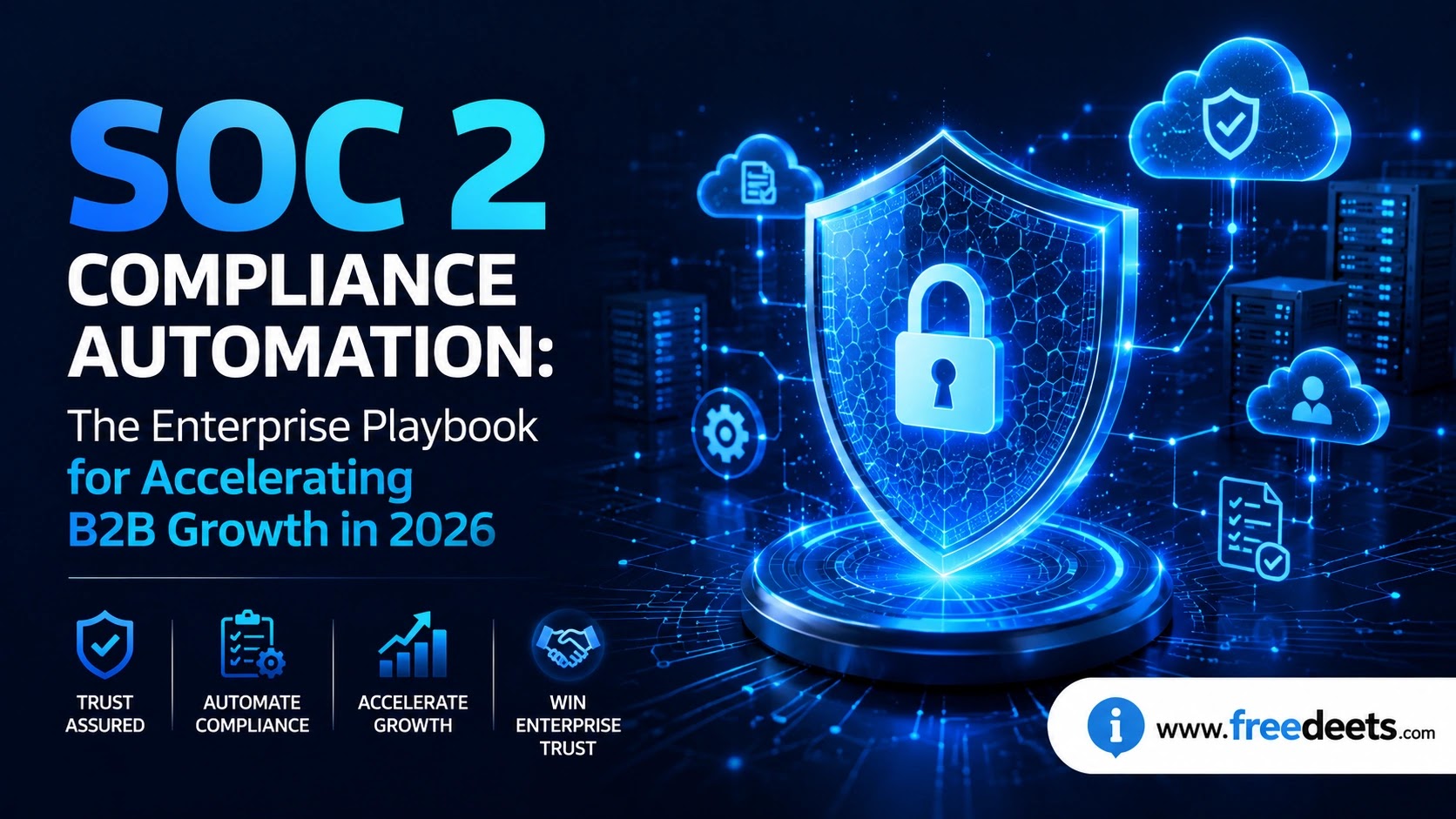
SOC 2 Compliance Automation: The Enterprise Playbook for Accelerating B2B Growth in 2026
Deploying SOC 2 compliance automation has become a vital strategic growth initiative for enterprise organizations in 2026. In the competitive B2B SaaS market, verifiable data governance and cybersecurity controls determine whether enterprise procurement deals close or stall. This guide explores how SOC 2 compliance automation eliminates manual evidence collection, shortens audit lifecycles, and equips sales teams with the verified security proof needed to accelerate deal velocity.
When enterprise prospective clients—such as financial institutions or healthcare organizations—evaluate new software vendors, verifying their data protection posture is the primary requirement. Under standards maintained by the American Institute of CPAs (AICPA), obtaining a SOC 2 Type II report confirms that internal controls operate reliably across long observation windows. Replacing manual spreadsheets with automated platforms prevents deal fatigue and safeguards customer data.
Executive Summary: SOC 2 Readiness in 2026
SOC 2 Type II compliance is an essential commercial requirement for B2B expansion. Manual audits are slow and resource-heavy. Adopting integrated compliance automation platforms enables continuous monitoring, speeds up vendor security reviews, and allows sales teams to close enterprise contracts faster.
1. Why Manual SOC 2 Preparation Fails at Enterprise Scale
The core objective of a SOC 2 audit is proving that internal controls fulfill the Trust Services Criteria (Security, Availability, Processing Integrity, Confidentiality, and Privacy). While a Type I audit checks controls at a single moment, a Type II audit verifies that controls functioned continuously over an observation period of 6 to 12 months.
Manually preparing for a Type II evaluation requires collecting hundreds of pieces of proof: configuration screenshots, access review logs, code commits, employee policy acknowledgments, and penetration tests. For engineering teams managing cloud workloads on AWS, Azure, or Google Cloud, manual collection creates severe bottlenecks:
- Engineering Drain: Senior developers and DevOps engineers lose hundreds of working hours capturing screenshots and pulling logs instead of building product features.
- Evidence Gaps & Audit Risk: Missing a single scheduled quarterly access review during an observation period can lead to an auditor exception.
- Compliance Drift: Spreadsheets provide only point-in-time snapshots, leaving blind spots between audit cycles.
- Prolonged Sales Cycles: Security teams struggle to complete extensive vendor questionnaires quickly, delaying contract sign-offs by months.
2. Strategic Benefits of SOC 2 Compliance Automation
Adopting automated governance tools transforms compliance from an annual scramble into a smooth, ongoing business advantage:
Accelerated Enterprise Sales Velocity
Lengthy security reviews frequently stall enterprise procurement discussions. Modern compliance automation platforms generate dynamic, real-time Security Trust Centers. Account executives can share these verified portals immediately with prospective buyers, answering questionnaires in minutes and cutting sales cycle lengths by up to 50%.
Continuous Control Monitoring
Rather than reviewing security configurations only when an audit deadline approaches, automation provides continuous monitoring. Platforms connect directly to cloud APIs and version control systems. If an IAM rule changes unexpectedly or an S3 storage bucket becomes public, the system triggers real-time alerts to correct the issue before it creates a vulnerability.
Substantial Cost & Overhead Reductions
Traditional manual readiness frequently costs six figures in specialized consulting fees simply to organize evidence. By automating up to 90% of recurring data collection, companies cut advisory expenses significantly while keeping engineers focused on core roadmap development.
3. Core Architecture of an Automated Compliance Stack
A modern compliance platform serves as a central hub, connecting across your operational infrastructure:

- Cloud Infrastructure Telemetry: Integrates with AWS, Azure, and Google Cloud to track encryption at rest, network subnet configurations, and system logging in real time.
- Identity & Access Management (IAM): Connects with solutions like Okta and Azure AD to verify multi-factor authentication (MFA) enforcement and confirm immediate account de-provisioning when employees leave.
- DevOps & Change Management: Monitors repositories like GitHub and GitLab to confirm that every production deployment passes branch protections and mandatory peer code reviews.
- HRIS & Background Checks: Integrates with systems like Rippling and Gusto to ensure employee onboarding documentation, security training, and background verifications are completed systematically.
4. Lowering Cyber Insurance Premiums with SOC 2 Automation
Maintaining verified security protocols helps businesses scale commercial sales while lowering corporate liability exposure. Security baselines aligned with the NIST Cybersecurity Framework demonstrate measurable risk reduction to insurance underwriters.
As corporate cyber risk increases, insurance providers require clear evidence of active security controls during underwriting reviews. Maintaining continuous monitoring through SOC 2 automation proves disciplined risk management, helping secure higher coverage limits and lower annual premiums for cyber liability policies.
5. A 4-Step Playbook for Deploying SOC 2 Compliance Automation
Implementing an automated compliance workflow follows a clear deployment roadmap:

- Step 1: Scoping and Gap Analysis: Connect your infrastructure to the platform to run an instant gap analysis against your target Trust Services Criteria, highlighting areas needing remediation.
- Step 2: Policy Documentation: Adopt auditor-approved security templates provided by the platform, customizing them to fit your organization’s unique operational structure.
- Step 3: Technical Integration: Connect API integrations across cloud environments, identity providers, and ticketing systems to begin continuous evidence logging.
- Step 4: Engage Audit Partners: Select an independent CPA audit firm that works directly within your automation platform to review real-time evidence and issue your formal SOC 2 Type II report.
Frequently Asked Questions About SOC 2 Compliance Automation
What is the core difference between SOC 2 Type I and Type II?
A SOC 2 Type I report verifies that your security controls are suitably designed at a specific point in time. A SOC 2 Type II report—which enterprise buyers expect—confirms that those controls operated effectively over an extended testing period of 6 to 12 months.
Does compliance automation software replace the external auditor?
No. Automation tools handle evidence gathering and track controls continuously, but a formal SOC 2 report must be evaluated and issued by an independent, licensed CPA firm.
How much does SOC 2 compliance automation cost?
Pricing typically follows a subscription model based on organization size, connected cloud assets, and scoped Trust Services Criteria. For growing businesses, annual software costs range between $15,000 and $45,000, delivering substantial net savings compared to traditional consulting and internal administrative costs.
Key Takeaways for B2B Leaders
- Replace manual spreadsheets with automated platforms to eliminate engineering drag.
- Use real-time security trust centers to clear enterprise procurement hurdles up to 50% faster.
- Select an auditor experienced with automation software to simplify formal report sign-off.
Conclusion
In modern enterprise markets, demonstrating disciplined data protection is fundamental to commercial success. Relying on manual evidence collection creates operational friction and slows revenue opportunities. Investing in SOC 2 compliance automation provides continuous control monitoring, builds client confidence, and gives your sales team the verified documentation required to close large enterprise deals efficiently.